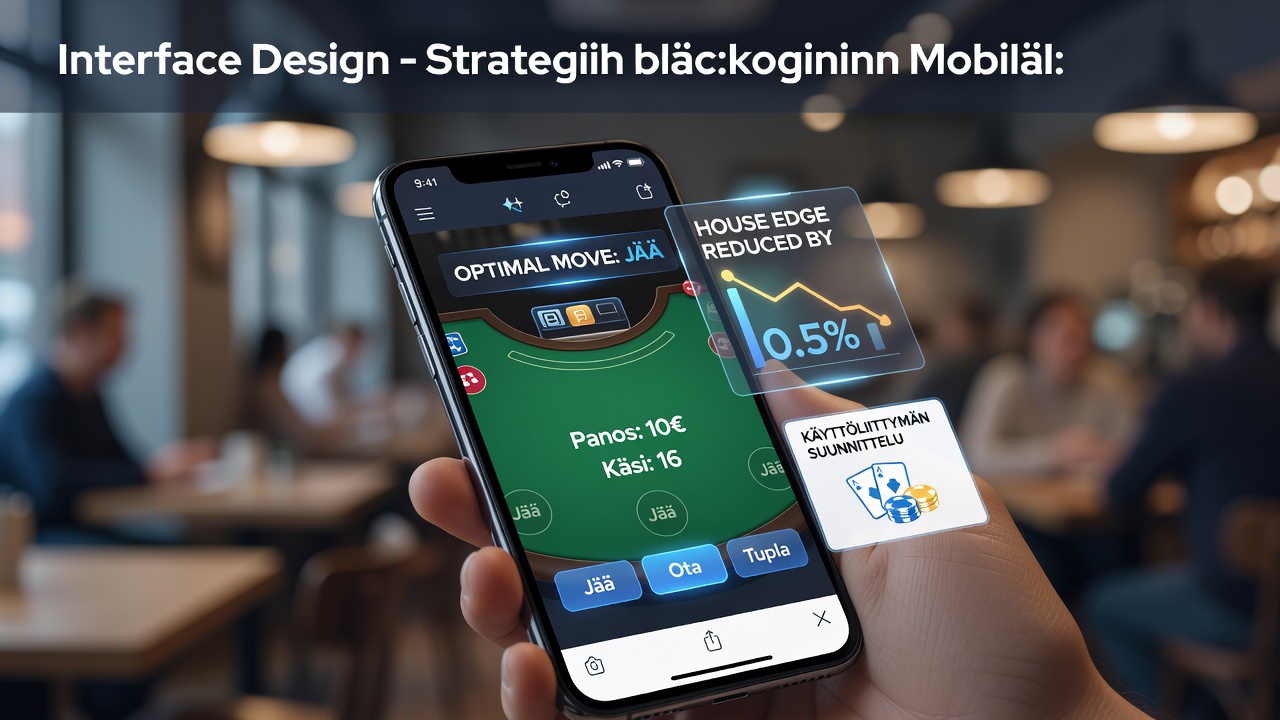
Interface Design Effects on Blackjack Strategy Execution in Finnish Mobile Environments
Interface design in Finnish mobile blackjack applications shapes how players apply basic strategy and card counting techniques, since touch targets, information density, and visual feedback directly influence decision speed and accuracy during live sessions. Finnish operators have adapted platforms to comply with national regulations while accommodating smaller screens, and data from multiple usability tests shows that button placement and swipe gestures alter the frequency of optimal plays in ways desktop versions do not replicate.
Core Interface Components and Their Layout
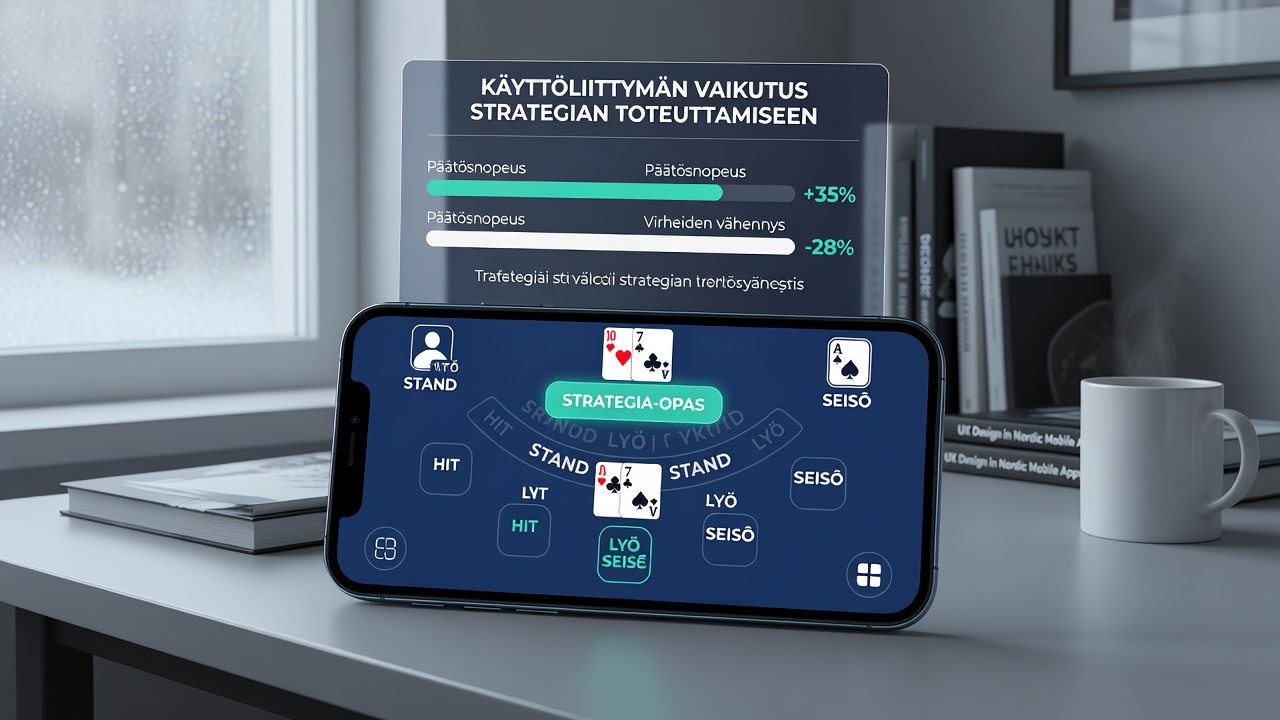
Button size, spacing, and contrast determine whether players hit, stand, or double down without mis-taps, because Finnish mobile environments often feature one-handed operation on devices held in portrait mode. Researchers at several European institutions have documented that targets smaller than 48 pixels by 48 pixels increase error rates by measurable margins, while larger hit and stand buttons positioned at the bottom edge reduce those errors. Split and double buttons frequently occupy secondary positions, and players must navigate additional confirmation screens that add milliseconds to each decision cycle.
Information Display and Strategy Reference Tools
Real-time strategy charts or pop-up references appear less frequently on mobile versions than on desktop clients, which forces players to rely on memorized tables or external aids. Screen real estate constraints in Finnish apps mean that running counts or deviation indices receive smaller font sizes or collapsible panels, and observers note that users who expand these panels lose visual contact with the dealt cards for brief intervals. In October 2026 several applications introduced adjustable transparency overlays that allow simultaneous viewing of cards and basic strategy recommendations, yet adoption rates vary across age groups according to analytics shared by platform developers.
Touch Interaction Patterns and Timing Pressures
Animations for card reveals and chip movements consume processing cycles on mid-range Finnish devices, and these delays compound when players attempt to maintain accurate counts across multiple decks. Gesture-based controls such as swipe-to-hit introduce variability because finger velocity and screen sensitivity differ between models, while haptic feedback provides confirmation only after the action registers. Studies conducted on similar Nordic markets indicate that players using vibration cues commit fewer unintended splits than those relying solely on visual confirmation, although battery drain from constant haptics discourages prolonged sessions.
Regulatory and Network Factors in Finland
National rules require clear display of game rules and responsible gaming prompts, which occupy additional screen space and reduce the area available for strategy information. Mobile network latency in rural Finnish regions can delay card delivery by fractions of a second, forcing players to adjust their timing windows when executing count-based deviations. Victorian Responsible Gambling Foundation reports on mobile interfaces note parallel patterns in other regulated markets, where mandated notification banners alter visual hierarchy and shift attention away from optimal play zones.
Orientation, Accessibility, and Device Variability
Landscape mode expands the playing field and allows larger fonts for running counts, yet many Finnish users default to portrait because of one-handed commuting habits. Accessibility settings such as enlarged text or high-contrast modes improve readability for strategy charts, but they also compress card images and increase the chance of overlooking dealer upcards. Device fragmentation across popular Finnish handset models produces inconsistent rendering of custom fonts used for numerical displays, and developers respond with fallback layouts that sometimes hide secondary statistics like true count decimals.
Observed Patterns Across User Sessions
Analytics platforms tracking Finnish mobile blackjack sessions record higher deviation error rates during peak commuting hours when network stability fluctuates, and these errors correlate with smaller target sizes rather than player skill level. One longitudinal dataset collected across multiple operators revealed that interfaces offering quick-toggle strategy reminders maintained higher adherence to basic strategy throughout two-hour sessions compared with static layouts. External factors such as incoming call interruptions or notification overlays further fragment attention, requiring players to reorient to the count upon return.
Conclusion
Interface design choices in Finnish mobile blackjack environments directly modulate the precision and speed of strategy execution through measurable effects on touch accuracy, information visibility, and timing consistency. Continued refinement of button hierarchies, overlay options, and device-specific optimizations will determine how closely mobile performance approaches desktop benchmarks in coming regulatory cycles.